
 Click main image to view in full screen. Unlock all 29 preview images:
Overall Equipment Effectiveness (OEE) – PowerPoint PPTX Template
PowerPoint (PPTX) + Zip archive file (ZIP) 142 Slides


BENEFITS OF THIS DOWNLOADABLE POWERPOINT DOCUMENT
- Provides a holistic framework for the planning and implementation of an OEE system.
- Provides the methods and tools for OEE implementation.
- Provides approaches for increasing OEE.
OEE PPT TEMPLATE DESCRIPTION
The goal of Total Productive Maintenance (TPM) is to increase equipment effectiveness so that each piece of equipment can be operated to its full potential and maintained at that level. To maximize equipment effectiveness, you need a measurement tool that can help you understand your equipment problems so that you can take steps to eliminate them. The key to this understanding is Overall Equipment Effectiveness (OEE).
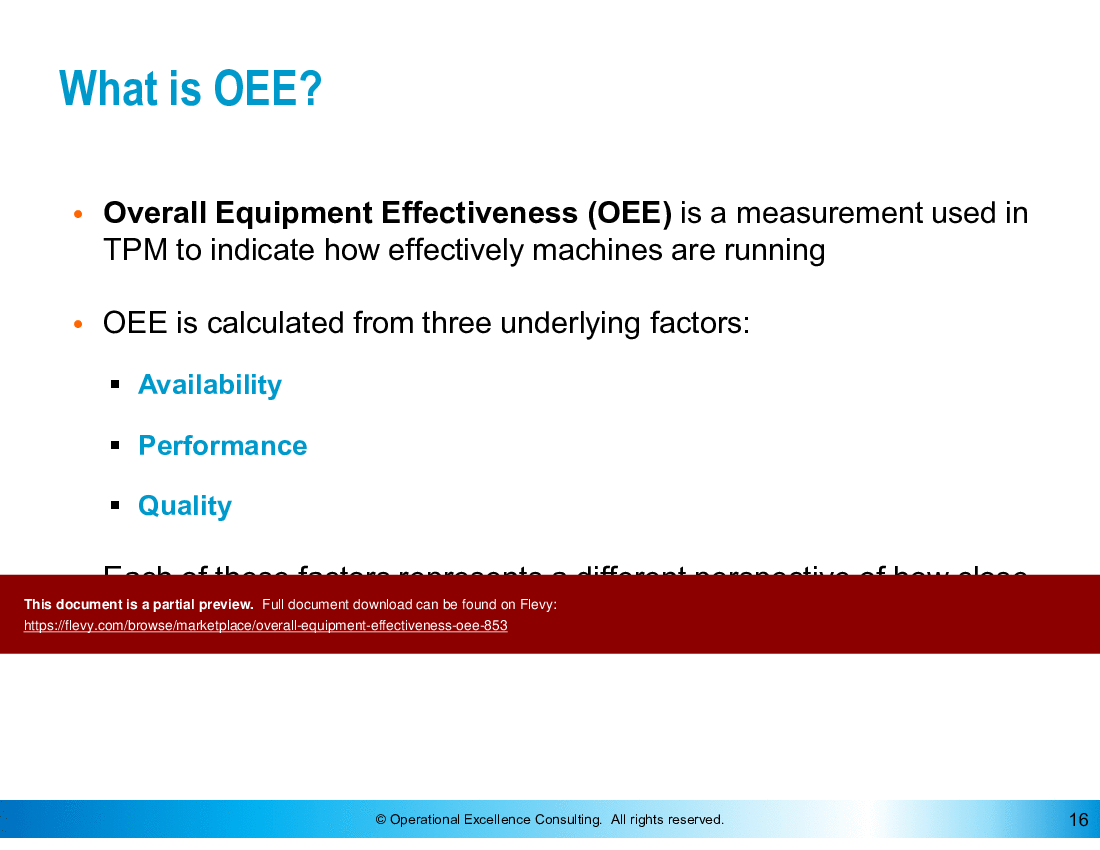
OEE is a crucial measure in TPM that tells you how well your equipment is running. It is a composite metric that takes into account three factors: the time the machine is actually running (Availability), the quantity of products the machine is turning out (Performance), and the quantity of good output (Quality).
• Availability: Refers to the percentage of time the equipment is available for production. Downtime due to breakdowns, maintenance, and changeovers are considered losses.
• Performance: Refers to the percentage of the actual production rate compared to the theoretical maximum rate. Factors that affect performance efficiency include operator performance, equipment speed, and defects.
• Quality: Refers to the percentage of good quality products produced compared to the total number of products produced. Defects and rework are considered losses.
OEE is calculated as the product of the three factors: OEE = Availability x Performance x Quality. The result is expressed as a percentage, where 100% represents perfect production with no losses.
Overall, OEE is a powerful tool for measuring equipment effectiveness and identifying opportunities for improvement. It provides a comprehensive view of equipment performance and helps to prioritize improvement activities to achieve maximum productivity and cost savings. By using OEE to drive continuous improvement, manufacturing and production organizations can optimize their equipment performance and achieve their business goals.
This OEE presentation is designed by our JIPM-certified TPM Instructor to help you understand the importance of Overall Equipment Effectiveness (OEE) and how it relates to Total Productive Maintenance (TPM). You will learn about the concepts of OEE, including Availability, Performance, Quality, and the Six Major Losses. Additionally, this presentation will provide you with an understanding of the steps involved in collecting and processing OEE data, as well as how to report the results. Finally, you will be introduced to approaches for reducing equipment-related losses to increase OEE and add value to the factory's operations. By the end of this presentation, you will be equipped with the knowledge and skills to effectively use OEE to optimize equipment performance and achieve business goals.
||||||||||||||||||||||||||||||||||||||||||||||||||||||||||||||||||||||||||||||||||||||||||||||||||||||||||||||||||||||||||||||||||||||||||||||||||||||
Note: This training package includes:
1. Overall Equipment Effectiveness (OEE) PPT training presentation (PowerPoint format)
2. OEE poster (PDF format, in color and monochrome, printable in A3 size)
3. OEE calculator (Excel format)
||||||||||||||||||||||||||||||||||||||||||||||||||||||||||||||||||||||||||||||||||||||||||||||||||||||||||||||||||||||||||||||||||||||||||||||||||||||
LEARNING OBJECTIVES
1. Understand the concept and philosophy of TPM and its relationship with OEE.
2. Explain the importance of OEE and how it relates to value-adding work of the factory.
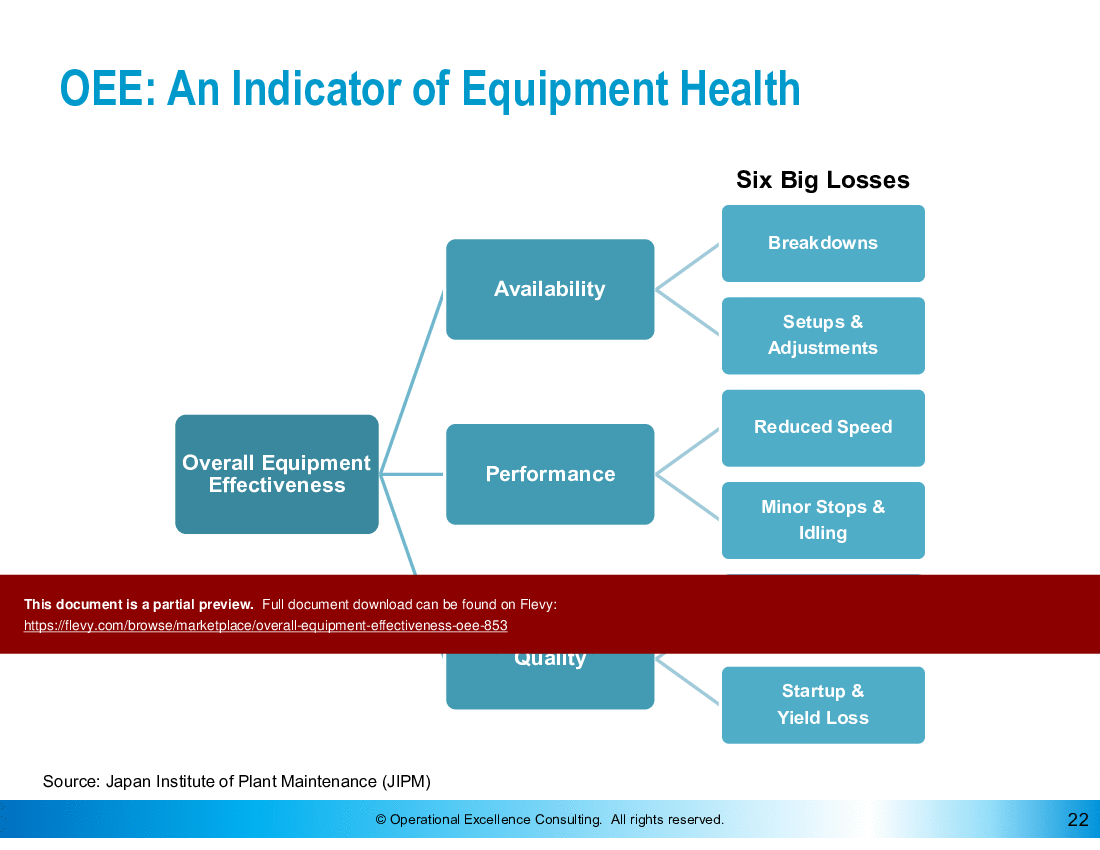
3. Understand OEE concepts such as Availability, Performance, Quality and the Six Major Losses.
4. Describe the steps of collecting and processing OEE data and reporting results.
5. Define approaches for reducing equipment-related losses to raise OEE.
CONTENTS
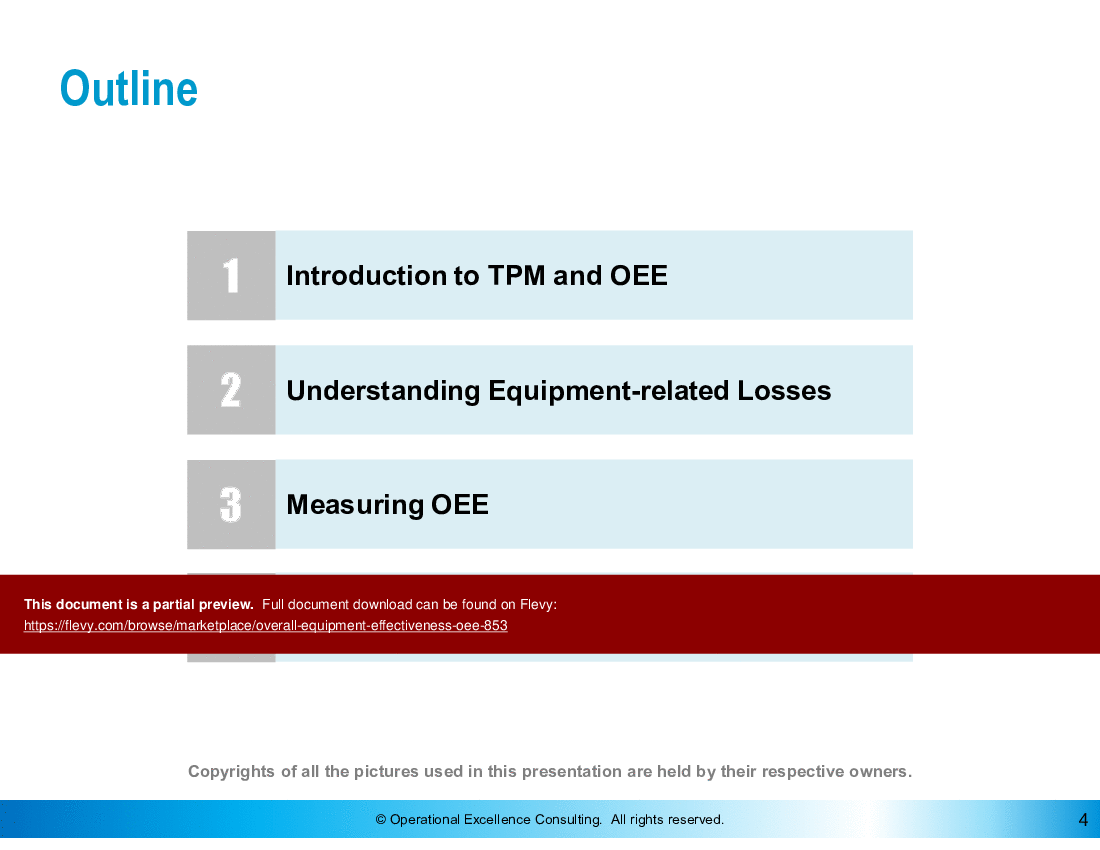
1. Introduction to TPM & OEE
• What is TPM?
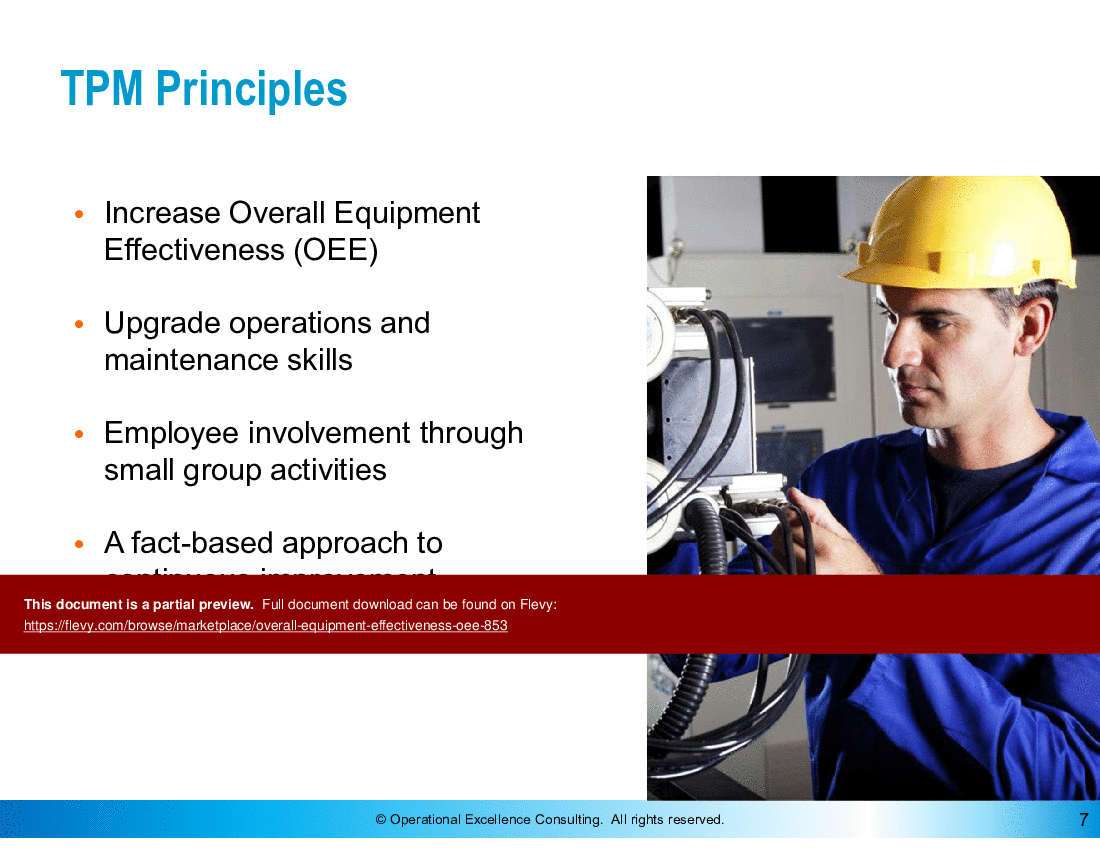
• TPM Principles
• Why is TPM Important?
• TPM Goals
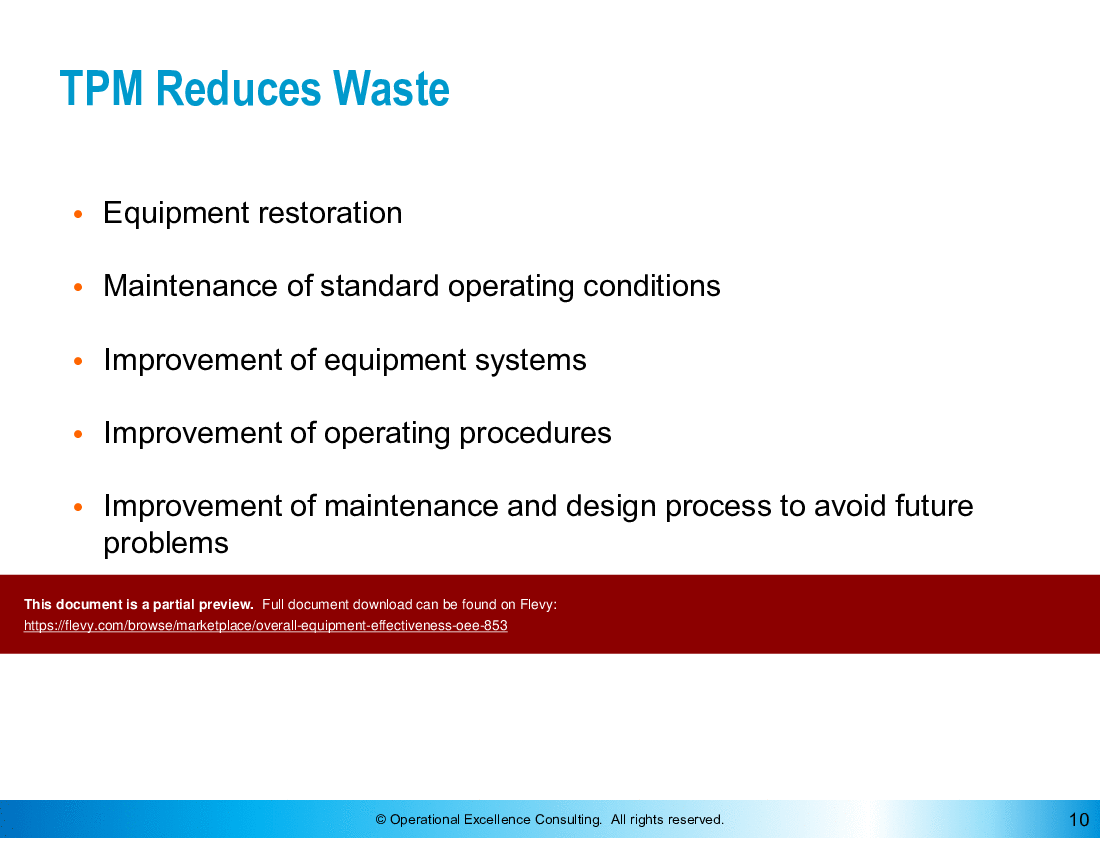
• TPM Reduces Waste
• Eight Strategies ("Pillars") of TPM
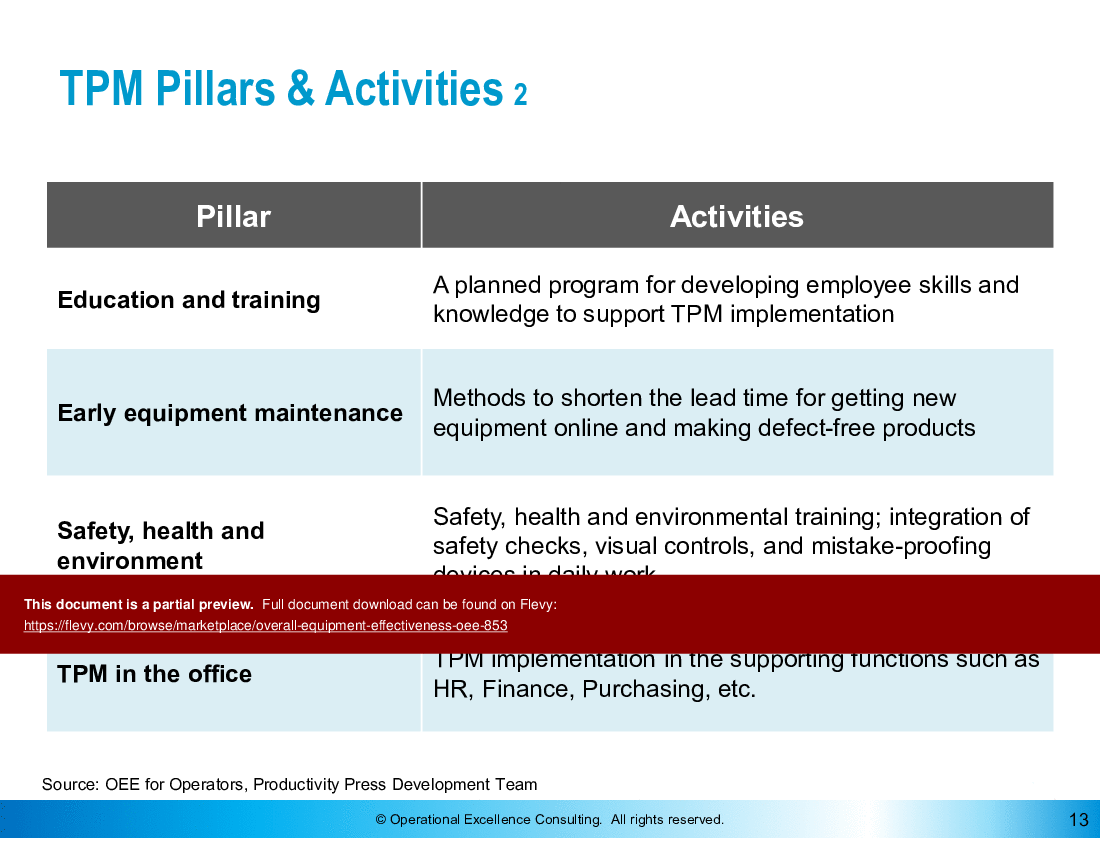
• TPM Pillars & Activities
• TPM Benefits
• Relationship Between TPM & OEE
• What is OEE?
• Why is OEE Important?
2. Understanding Equipment-related Losses
• Three Key Factors of OEE
• "World Class" OEE
• Six Big Equipment Losses
• Visualizing OEE & the Six Big Losses
• Equipment Losses & OEE
• Calculating OEE
• Breakdown Losses
• Setup & Adjustment Losses
• Minor Stoppage Losses
• How to Eliminate Minor Stoppages
• Speed Losses
• Steps for Dealing with Speed Loss
• Quality Defect & Rework Losses
• Startup Losses
• How to Eliminate Chronic Defects
• Strategies for Zero Breakdowns
3. Measuring OEE
• Closing the Feedback Loop
• Measuring OEE
• Collecting OEE Data
• Processing OEE Data
• Reporting OEE Data
• Practical Tips for Measuring OEE
4. Improving OEE
• Improving OEE
• Approaches to Improving OEE
• 5 Why Analysis
• Autonomous Maintenance
• Focused Equipment & Process Improvement
• Quick Changeover
• Poka Yoke (Mistake-Proofing)
• P-M Analysis
• How to Sustain TPM & OEE
• Critical Success Factors
*Note: The Japan Institute of Plant Maintenance (JIPM) is a nonprofit research, consulting, and educational organization that helps companies increase organizational efficiency and profitability through improved maintenance of manufacturing equipment, processes, and facilities. The JIPM is the sponsoring organization for the TPM Excellence Award, awarded annually to recognize excellence in company-wide maintenance systems. Based in Japan, JIPM is the innovator of methodologies that have been implemented around the world.
This presentation delves into the six major equipment losses and provides actionable strategies for dealing with each type of loss. It includes practical tips for measuring OEE and emphasizes the importance of involving operators in the data collection process.
Got a question about the product? Email us at support@flevy.com or ask the author directly by using the "Ask the Author a Question" form. If you cannot view the preview above this document description, go here to view the large preview instead.
PRESENTATION DEEP DIVE ANALYSIS
This deep-dive analysis was generated from the full 142-slide PowerPoint presentation.
Source: Best Practices in OEE, TPM PowerPoint Slides: Overall Equipment Effectiveness (OEE) PowerPoint (PPTX) Presentation Slide Deck, Operational Excellence Consulting
ABOUT THE AUTHOR

Operational Excellence Consulting, founded in 2009 by Allan Ung, draws from extensive experience at Microsoft, IBM, and Underwriters Laboratories (UL). We specialize in strategy deployment, customer experience design, and operational excellence, applying Design Thinking, Lean, and Systems Thinking to maximize customer value and minimize waste.
Our
... [read more]
Ask the Author a Question
You must be logged in to contact the author.




























